

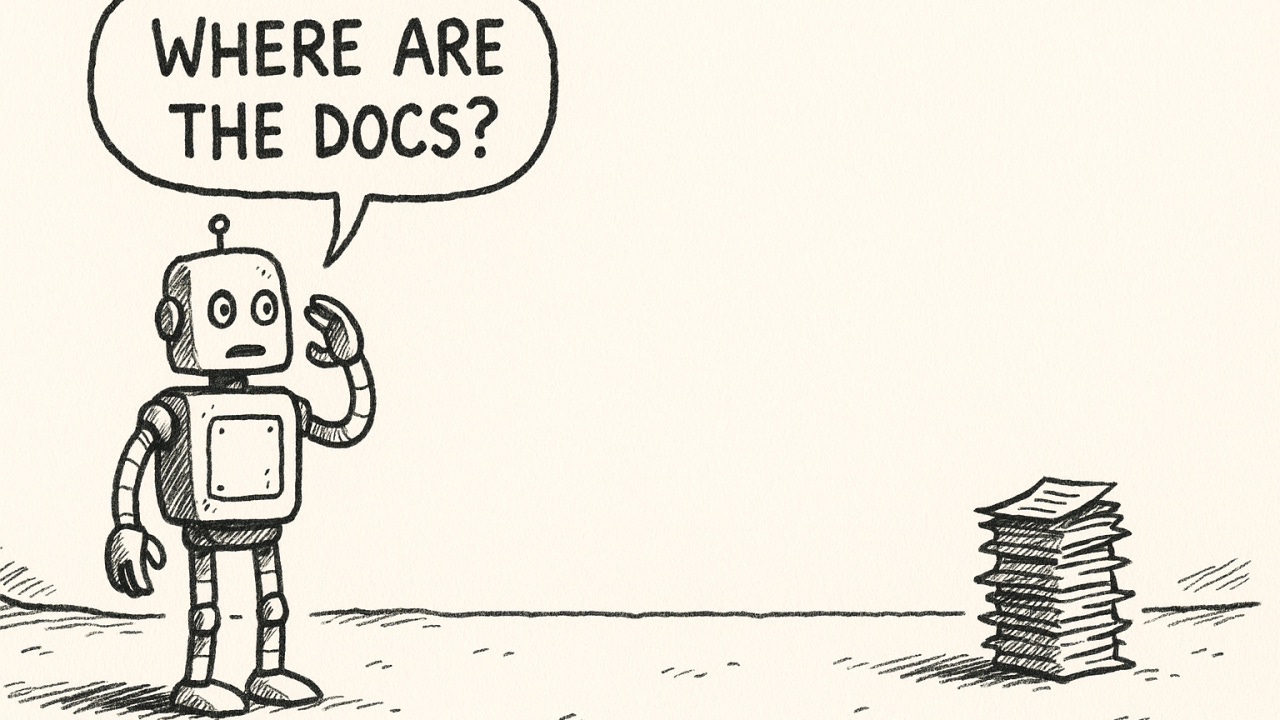
The rise of Model Context Protocol (MCP) servers tells an interesting story about toolchain fragmentation.
Anthropic released Claude with desktop integration. What felt like overnight, the ecosystem exploded with MCP servers: Notion, Linear, Jira, GitHub, file systems, etc. Each one a bridge between our AI robot friends and their necessary sources of truth and input.
We’ve distributed product context across disconnected systems, and now we’re scrambling to reconnect them for AI consumption.
Product teams adopted collaboration platforms for good reasons. Google Docs, Notion and Coda delivered real-time collab, richer formatting, cross-functional visibility. These tools improved how we all worked together.
But they also introduced distance. The PRD explaining a feature lives in Notion. The issues tracking its implementation live in Linear. The code implementing it lives in GitHub. The AI agent trying to help your engineer (or write code on its own!) needs all three.
So we build integration layers. MCPs for context retrieval, Webhooks for notifications, blah blah. Each added latency, failure modes, maintenance, etc.
Meanwhile, files (esp markdown) sitting in Git repos have always offered something different: adjacency. When documentation lives in the same repository as code, version control is unified. AI systems access context through the same interface they use for code. The integration tax drops to zero.
The tradeoff is real. Git workflows remain challenging for non-technical team members. Markdown lacks the collaborative features—inline comments, @mentions, rich tables—that product teams depend on. This isn’t a simple swap.
But it suggests an architectural question: what if the next generation of product tools built on Git as infrastructure rather than treating it as one integration target among many?
You’d preserve proximity while rebuilding the collaboration layer on top. Product context becomes a first-class artifact in the repository. AI systems get native access. PMs get the UX they need.
The interoperability boom isn’t a mistake, it’s a rational response to toolchain sprawl. But the fact that we need it signals a deeper fragmentation we’ve normalized.
Product documentation’s center of gravity is shifting back toward code. The question is whether we should continue to ride that shift or should it go in another direction?
What’s your team’s documentation strategy in the AI era?